Málaga: a castle hill, a one-armed cathedral, sardines on the sand
Start on Gibralfaro, the 130 m hill with a castle on top, and Málaga lays itself out for you: the city on one side, the Mediterranean on the other. A walled corridor that Yusuf I built links the castle to the Alcazaba below it, and beside the Alcazaba's entrance sits the Roman theatre, rediscovered only in 1951. Then find the cathedral and count its towers. Only one was finished. The south tower never was, and the city calls the building La Manquita, the One-Armed Lady.
Málaga is the capital of its province, a city of 599,063 people, and it counts among the oldest continuously inhabited cities in Western Europe: Phoenicians from Tyre founded it as Malaka around 770 BC. Roman rule began in 218 BC, Islamic forces took the city in 711 or 713, and Christian forces took it on 18 August 1487, after a siege of more than three months. Think of Málaga in two layers. The old one is the hill, the walls and the cathedral. The new one is museums: the Museo Picasso opened in 2003, the Carmen Thyssen Museum in 2011 in the Palacio de Villalón, and the Centre Pompidou Málaga in 2015 in El Cubo, a glass-and-steel cube on Muelle Uno in the port.
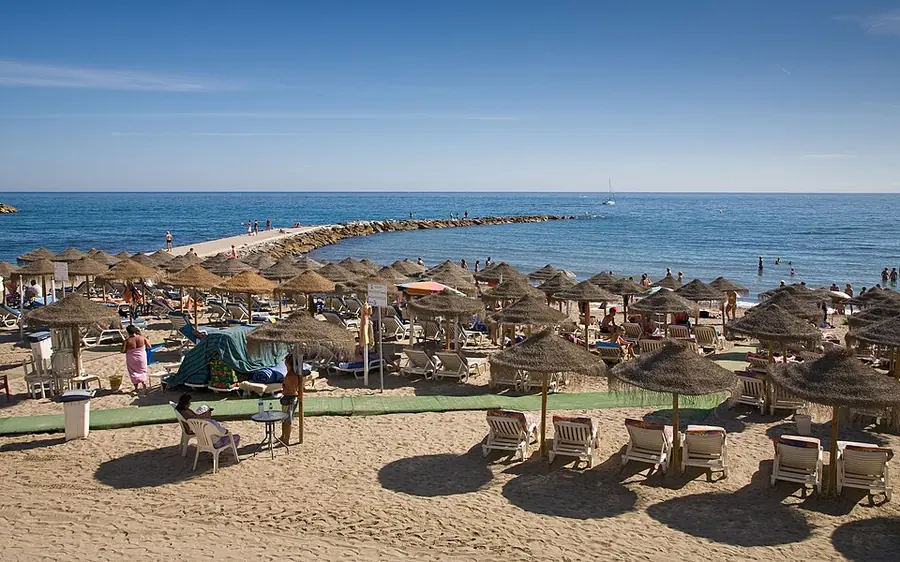
Do the hill early, before the heat. In the Alcazaba you cross two rings of walls and five gates before you reach the palace areas. Then walk to the Museo Picasso, 200 m from Plaza de la Merced, where Picasso was born. Lunch is fish. An espeto is sardines threaded on a cane rod and roasted beside an olive-wood fire on the sand; professional cooks later moved the fire into boats filled with sand. Give the afternoon to La Malagueta, a name shared by the beach and the bullring. In the evening, walk Calle Marqués de Larios, the main shopping street, and the lanes of Soho, the arts quarter between the harbour and the old town, known for its street murals.
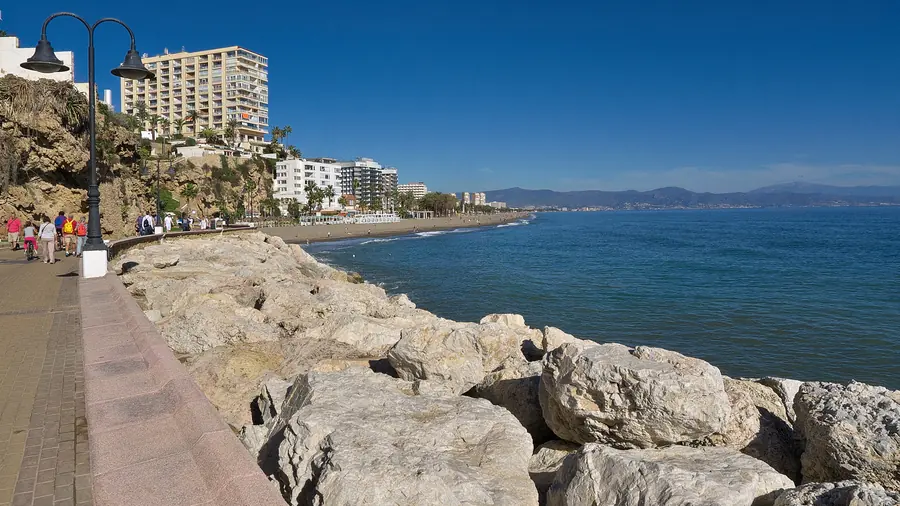
Málaga suits you if you want city sights and a swim on the same day: our map data counts 28 beaches within 15 km and 39 walking routes within 25 km, 10 of them easy. It suits a short break too, with the airport about 11 km from the city (est.). Think twice about July and August. Highs reach 32 degrees, nights stay at 22 to 23, hotels are about 81% full (est.), and the terral, a warm, dry wind from land to sea, blows mostly in summer. Think twice too if you want a warm sea in spring: it is about 15.5 degrees in February and March and 18.4 in May (est.).
The easy months are May and October, with highs of about 25 degrees, and even January reaches 18 by day. Rain comes to about 454 mm a year. November is the wettest month at 80 mm, March follows at 74, and June, July and August get 0 to 1 mm each. Sunshine runs from 11.4 hours a day in July to 5.2 in December. Then choose from the calendar. Carnival in February ends with the burial of an anchovy at Malagueta beach. Holy Week runs from Palm Sunday to Easter Sunday, with processions that last 6 to 14 hours. The Feria de Agosto fills August with flamenco, verdiales music and bullfights at La Malagueta.