Fuengirola: a castle at one end, eight kilometres of promenade
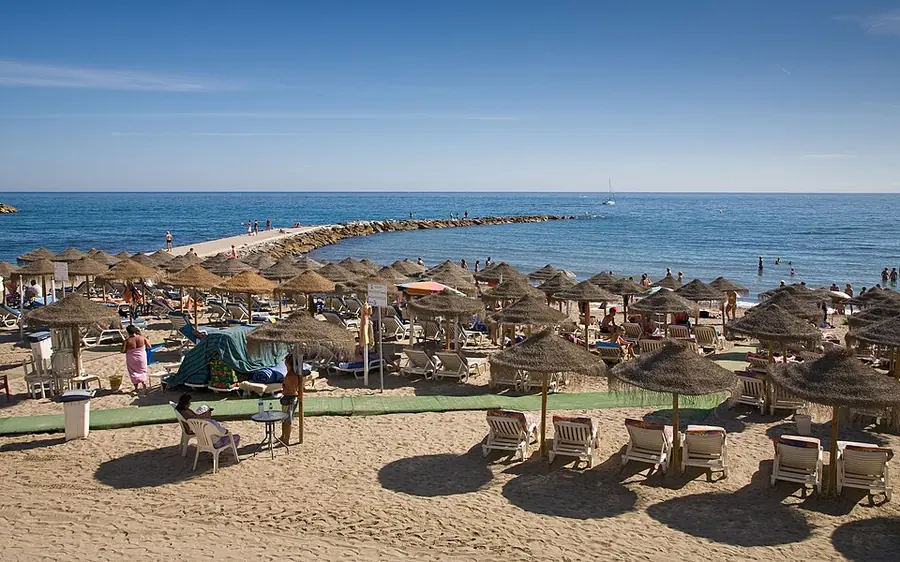
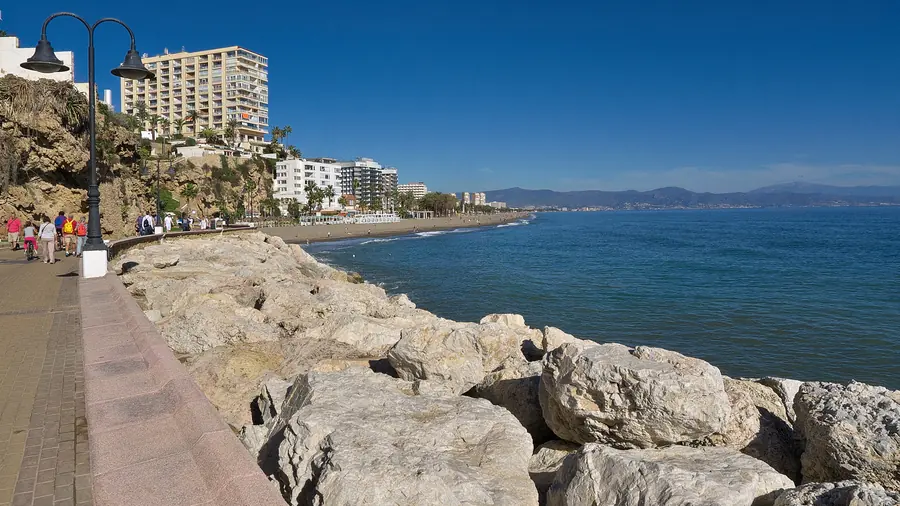
Stand by the walls of Sohail Castle, on its hill at the western end of the beach, and the Paseo Marítimo starts below you. It runs about 8 km to Torreblanca, and the beaches along it include Santa Amalia, Los Boliches, Las Gaviotas and Carvajal. Abd-ar-Rahman III ordered a small citadel built on this hill in 956. On 15 October 1810, the day after an Anglo-Spanish force under Lord Blayney landed, a battle was fought at the castle. The Franco-Polish side won, Blayney was captured and his men re-embarked in disarray.
Fuengirola is a city of 85,211 people (INE, 2025) on the Costa del Sol, in Málaga province. The Romans called the town Suel. For more than a century it lived on fishing and farming, and in the 1960s tourism took off and made it the resort city it is today. It is also partly Nordic. In 2025, 4,423 residents were born in Finland and 1,954 in Sweden. In the 1970s and 80s Los Pacos was a mostly Finnish district, its main street is still Calle Finlandia, and the Finnish school is there. Immigrants make up 44.4% of residents.
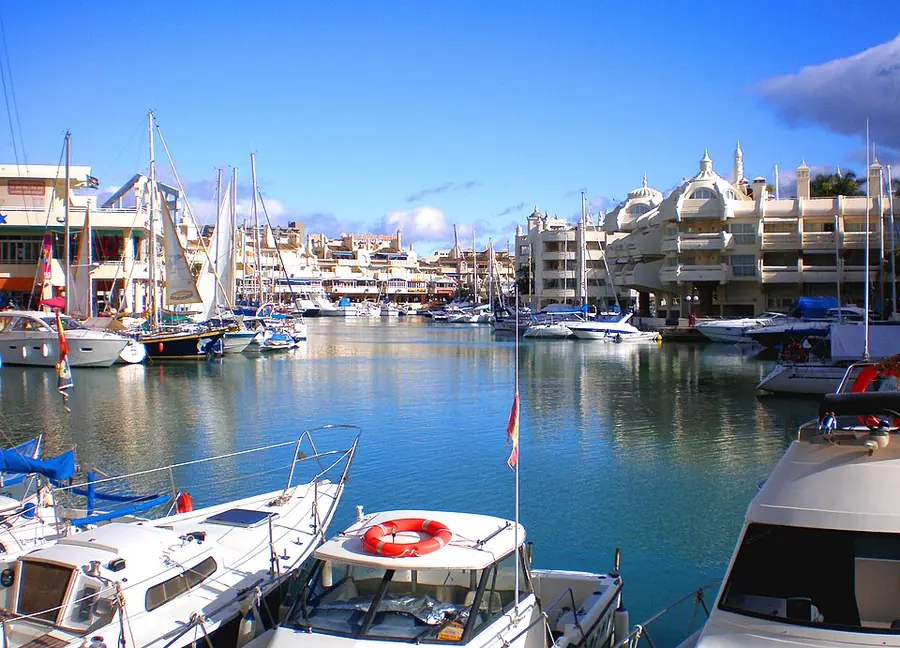
The day follows the promenade. In the morning use its bike lanes and outdoor gyms. At lunch look for espetos, sardines grilled in authorised boats beside the beach bars. In the afternoon, walk to the Plaza de la Constitución, the main square, with the Town Hall, a statue of the Catholic Monarchs and the church of Nuestra Señora del Rosario Coronada, which has a baroque façade and a clock and bell tower. In the evening people come back to the sea: the promenade and the marina are where the town goes out.
Fuengirola suits you if you want a long town beach and no hire car. The C-1 commuter line from Málaga ends here, and direct routes from Stockholm, Gothenburg, Copenhagen, Oslo and Helsinki operated to Málaga airport in every month of 2024. Our map data counts 44 beaches within 15 km (OpenStreetMap), a count of what is mapped, not of quality. Think twice if you want a quiet August: hotel beds are about 85% full (est.). Think twice if you came for an old Spanish town rather than a holiday city. And think twice about a winter swim, with the sea at about 15.7 degrees in February (est.).
The year is dry in summer and wet in late autumn. Rain adds up to about 517 mm (AEMET normals 1991–2020); June and July record none, November is the wettest month at 106 mm, and March gets 86 mm. July has 11.4 hours of sun a day. The sea is about 18.1 degrees in May and 23.6 in August, the warmest month (est.). For swimming without the August peak, look at June and September: little or no rain, a sea of about 19.5 and 22.3 degrees (est.), and hotels about 68% and 71% full (est.). October brings 64 mm of rain and a sea still at about 19.9 degrees (est.). The town does not shut in winter: in January highs are about 17.2 degrees at the Fuengirola station, with 5.9 hours of sun, and hotels are about 44% full (est.), much as in December.