Alicante: a port city under a castle
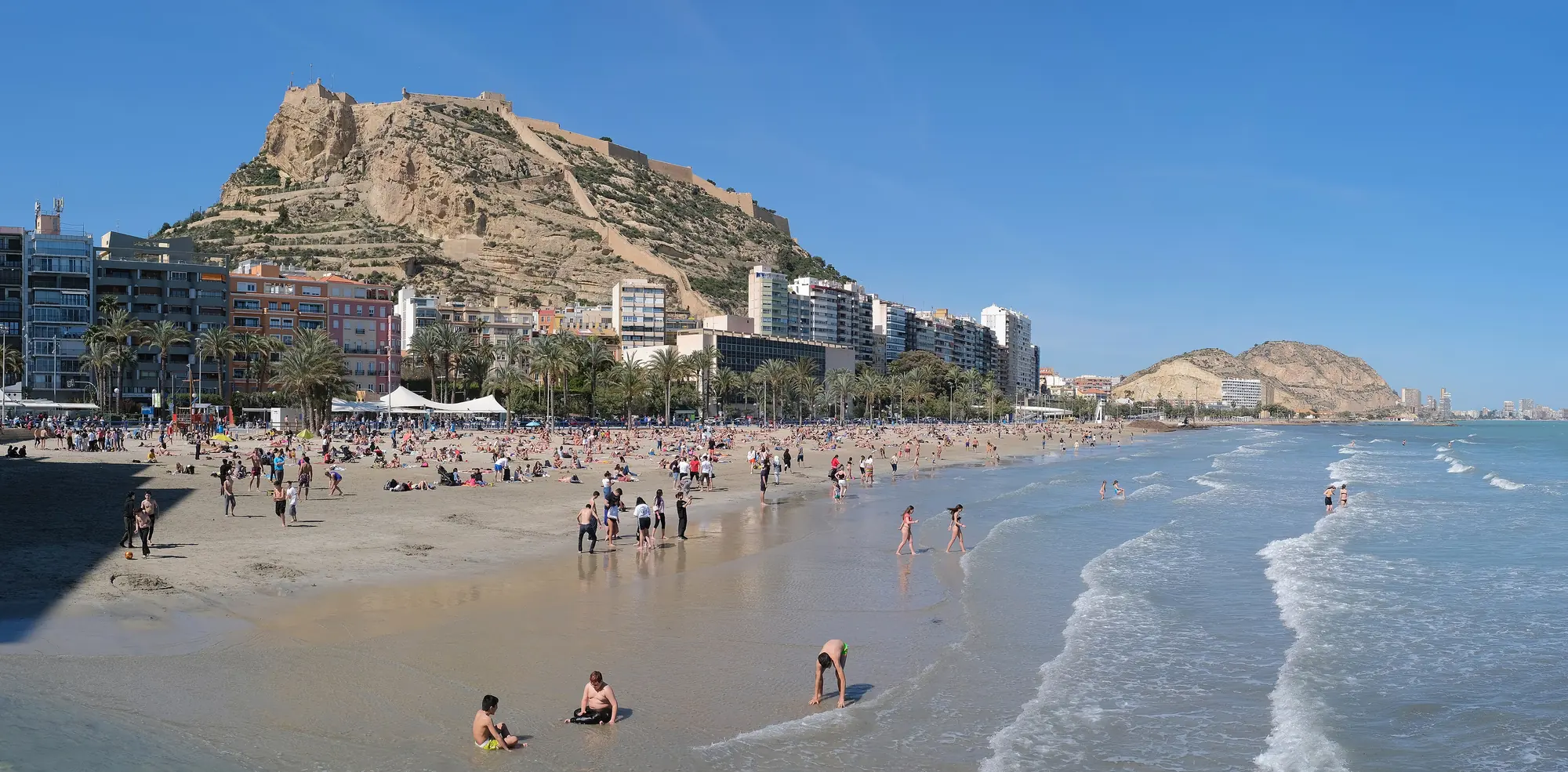
Stand on Postiguet beach in the morning and look up. The rock above the city has a profile, and Alicante calls it the face of the Moor. On top, 166 metres above the sea, sits Santa Bárbara Castle, which began as a Muslim fortress in the 9th century. A lift cut into the rock takes you up from the beach. The slower way is on foot through Santa Cruz, the old quarter, where small colourful houses climb narrow streets towards the walls.
Alicante is a working Mediterranean port and the capital of its province, a city of 366,221 people that, with Elche and the towns around it, forms a conurbation of nearly a million. It lives on tourism, services and public administration, and the EU's intellectual property office is here. That shows. This is a city that happens to have beaches, not a resort that grew a town. The old town is a rough triangle between the Rambla de Méndez Núñez, the Explanada de España and the castle hill, and at night its lanes around Santa Cruz and El Carmen become El Barrio, the traditional quarter for pubs and terraces.
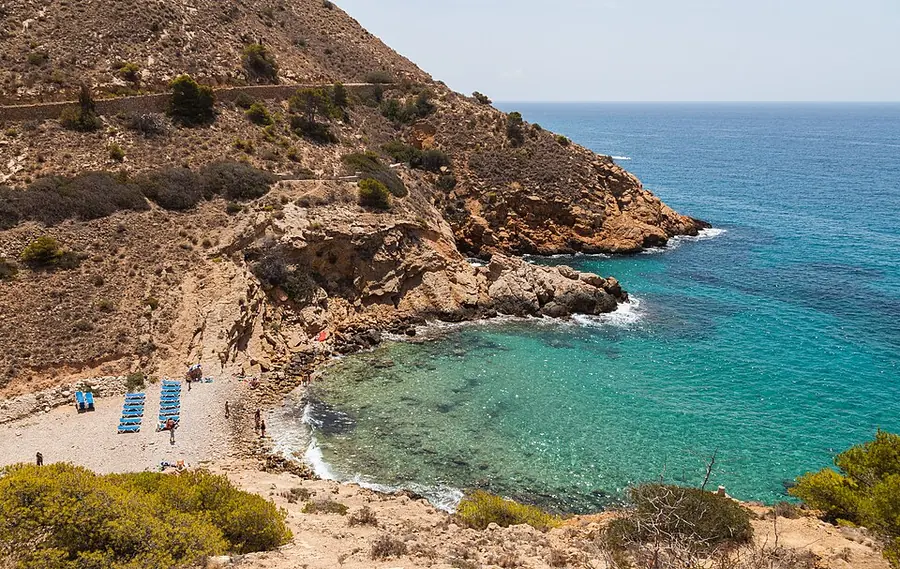
Give the morning to the castle, before the heat. Midday is for the sea. Postiguet, right below the rock, is an urban beach with calm water and golden sand; Playa de San Juan is the long one, with a lively promenade; L'Almadrava is a small, rocky cove for a quieter swim. Lunch is rice, and it is taken seriously. The province has about 300 rice dishes, soupy, dry or sticky, and locals call them arroces, keeping the word paella for Valencia's. Start with arroz a banda, cooked with bony rockfish that gives the rice its flavour and is then left out of the dish. In the evening, walk the Explanada, a palm-lined promenade beside the port paved with millions of marble tiles laid in waves.
Alicante suits people who want a city and a beach in the same day without a car. The tram runs out to Costa Blanca towns including Benidorm, and Tabarca, the only inhabited island in the region, is a boat trip away. It suits winter visitors, too: winters are mild and the city gets more than 3,000 hours of sun a year. Think twice if you want a quiet resort. In July and August hotels are about 76 to 82 percent full (est.) and afternoons reach about 31 °C. Think twice about late June if you want to sleep, when the Hogueras de San Juan, the city's main festival of bonfires and monuments, takes over the streets. And autumn rain, when it comes, can be torrential: in 1997 a flood brought 270 mm in six hours.
Alicante is one of the driest places in Europe, with about 284 mm of rain in a normal year. September is the wettest month at about 51 mm, July the driest at 3. Spring and autumn are the easy months: April and May give days of 22 to 25 °C, October about 25 °C and November about 21 °C. Swimmers should know the sea stays near 15 °C from January to March (est.), reaches about 19.5 °C in May (est.) and is warmest in August and September, at about 26 to 27 °C (est.). In January the days still reach about 17.5 °C.